Water softeners in Sussex, WI
Softening Sussex water at 300 mg/L
The Village of Sussex publishes one hardness figure for its water: 300 milligrams per liter as calcium carbonate, or 17.5 grains per gallon. That puts Sussex in the middle of the Waukesha County range, and the middle of this county's range is still far past what the USGS calls very hard.
Call (262) 829-5961Mon to Fri, 7am to 5pm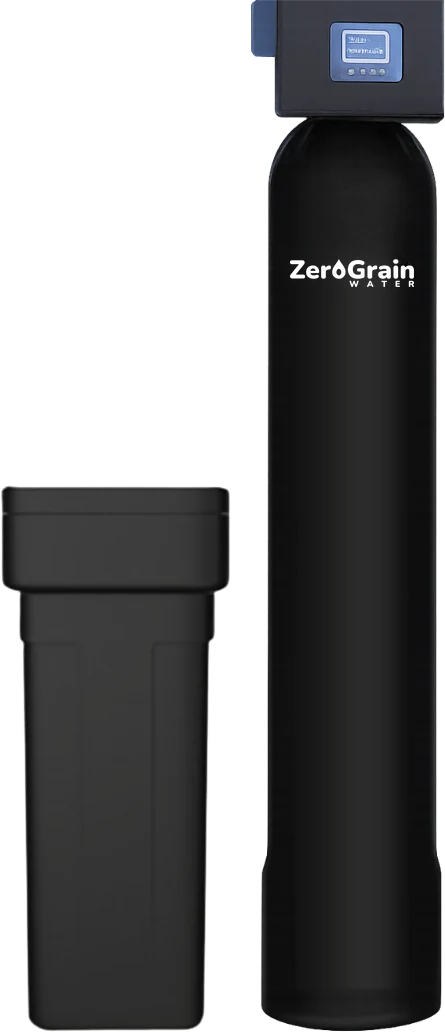
What is included
- A whole-home softener with its brine tank, sized to Sussex's 17.5 grains or to your own well
- An RO faucet for drinking water beside the kitchen sink, which comes only as part of the whole-home system
- Plumbing work by a contractor who holds a Wisconsin license
- Hardness checked before the work and rechecked at your tap until it shows zero
- A single price, given over the phone; no one visits to make a sale
- Quote calls on weekdays, 7am through 5pm
Sussex water hardness
Source: Village of Sussex water utility published water quality report
Get your price
Send your details and we will call you with one price. Nobody comes to the house to sell you anything.
Where 300 mg/L lands on the hardness scale
The USGS scale runs from soft, up to 60 mg/L, through moderately hard and hard, to very hard above 180. Sussex's 300 sits well beyond that last line. Divide it by 17.1 and you get the grains figure that softener settings use: 17.5.
For comparison, the USGS band for moderately hard water runs from 61 to 120 mg/L and the hard band from 121 to 180. Sussex clears both with room to spare.
You will see both numbers for the same Sussex water: milligrams per liter in the utility's report, grains per gallon on a softener's control head. They are one measurement in two units.
Harder than lake water, softer than Brookfield
Suburbs across the county line that buy Lake Michigan water run roughly half of what Sussex does. Brookfield's published figures run 23 to 34 grains. Sussex lands between the two, and between still means very hard.
Hard water is what leaves film on shower glass and spots on fixtures, and it builds scale inside water heaters. On Village water, every gallon your heater warms in Sussex carries 17.5 grains, whatever a town down the road reads.
A Sussex address does not always mean Village water
The Sussex name reaches past the Village. The Town of Lisbon shares it, and by the state's 2026 estimate Lisbon has 11,284 residents, close to the Village's 12,710.
For a house on the Village system, 300 mg/L is the published figure. If the house draws from its own well, in Lisbon or anywhere around Sussex, that figure does not describe your water. The number that matters then is the one from your tap or your lab report.
Iron rides along with the hardness here
Around Sussex, iron and hardness tend to come out of the ground together, from the same rock. On Village water, iron is the utility's concern. With a private well, it becomes your concern, and it belongs on the table before any system is sized.
If you have a well lab report, keep it handy and read us the iron line along with the hardness.
What happens on a Sussex quote call
It forks at the first question. Village water means the hardness is already known, 300 milligrams per liter, so the rest of the call is about the house itself: how many people live there, where the main line comes in, and whether an old softener stands beside it.
A private well, in Lisbon or elsewhere around Sussex, swaps the Village figure for your lab report, iron line included if it has one. Either branch ends the same way, with one price before you hang up, weekdays from 7am to 5pm, and nobody turning up afterward to sell.
Install day at a Sussex or Lisbon house
The plumbing contractor's first move is a hardness reading at your tap. On Village water it should land near 17.5 grains; on a well it either backs up your lab report or stands in for one you never had.
Next, any old softener is disconnected and hauled away, and the new softener and brine tank are set by the main line, in the basement, a utility room or the garage, with a drain and an outlet close by. The bypass and the air-gapped drain line go in, an RO drinking-water tap is fitted at the kitchen sink, and the last reading at your tap has to show zero.
What the softener does with 300 mg/L water
It trades the calcium and magnesium behind Sussex's 300 milligrams for sodium, or for potassium if the brine tank is kept full of potassium chloride. Every regeneration draws on that tank to recharge the resin, so keeping it topped up is the one recurring chore.
Hardness is the whole of its job. Bacteria and nitrate were never part of a softener's design, so a Lisbon well still needs the yearly bacteria test the Wisconsin DNR recommends, whatever sits by the main line.
Common questions
Is 17.5 grains really very hard?
Yes. The USGS starts its very-hard band at 180 mg/L, the same as 10.5 grains per gallon. Sussex's published 300 mg/L works out to 17.5 grains, well over that line.
My mailing address says Sussex, yet the house sits in the Town of Lisbon. Which number is mine?
If your water comes from the Village of Sussex utility, 300 mg/L. If it comes from a well on your property, the Village figure does not apply, and the softener is sized from your well's reading instead.
Can the brine tank hold potassium instead of salt?
Yes. Load it with potassium chloride and the softener trades hardness minerals for potassium rather than sodium. Mention it on the call if that is your plan.
Do I need to know my hardness before I call?
No. Give us your address or tell us the house runs on a well, and the quote starts from the Village figure or your lab results. Hardness is also measured at your tap before any work starts and again after.
Does anyone come out to give an estimate?
No. Your price comes over the phone, and nobody knocks until the licensed plumber arrives on install day.
Why is Sussex water harder than the lake-water suburbs?
It comes from a different source. The Village's wells pump Waukesha County groundwater at 300 milligrams per liter, and the suburbs beyond the county line that use Lake Michigan water run roughly half that.
I just moved into a Sussex house and know nothing about its softener. Can I still get a price?
Yes. Say whether the Village sends a water bill, the number of people in the house, and the spot the old unit occupies. The plumber reads your water before any work, so the new setting never depends on the last owner's choice.
Who does the plumbing on install day?
A plumbing contractor licensed in Wisconsin. Under Wis. Stat. ch. 145, the run from the softener to the drain, air gap included, is plumbing work, so it is the contractor's, while the quote, sizing, equipment and scheduling are ours.